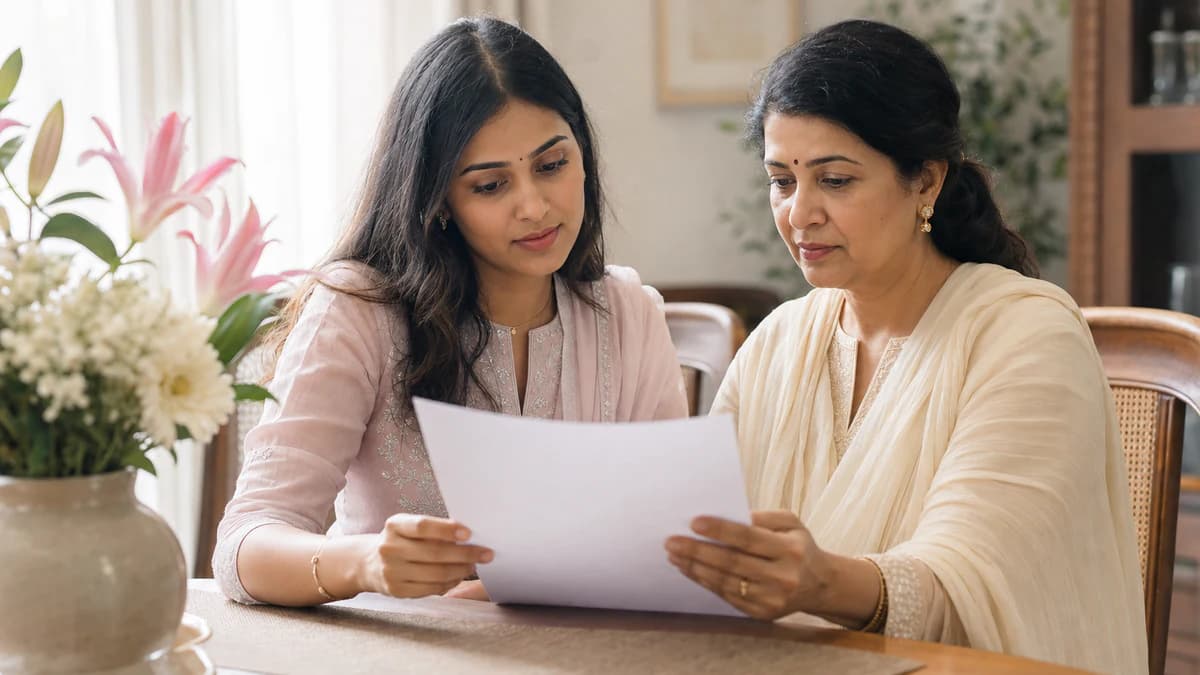
A girl biodata is not an audition script — it is a calm introduction of education, family, and values so two households can decide whether a conversation feels right.
Searching for a marriage biodata format for girl usually means you want one page that introduces education, career stage, family, and values without sounding like a job application or a dating profile. In many Indian households, a girl’s biodata is still the first document parents, relatives, and matchmakers share before a call. That hand-off deserves clarity, dignity, and privacy — especially when photos and phone numbers travel on WhatsApp. This guide is for girls and for parents who draft with them. Whether you are finishing a degree, starting a first job, or building a career, the same structure works: honest education and work lines, a short family picture, a respectful photo, hobbies that sound human, and preferences stated politely. You will also see how to preview a free PDF on BiodataBliss with Elegant Floral, Blush Lattice, Pearl Mist, and Classic Ivory.
What a marriage biodata format for girl should do
A marriage biodata format for girl is a family introduction, not a performance. Parents want education that is easy to verify, work that shows stability or intention, and a household picture that helps place you socially without prying. Relatives want a PDF that opens cleanly on a phone. You want the page to feel truthful and calm — never like an audition for approval.
Girls often face a tone trap: write too little and elders ask awkward follow-ups; write too much personal detail and the document feels unsafe once forwarded. Balance that with a scannable structure. Lead with name, age or year of birth, city, education, and present occupation or study status. Follow with family and a contact path. Add hobbies and partner expectations only after the fundamentals sit clearly.
Unlike a social profile, this document may be read aloud by someone who does not know your humour. Avoid slang, jokes about exes, and office jargon. Prefer sentences you would be comfortable hearing your aunt speak to another mother.
- Purpose: help two households decide whether a conversation feels right
- Readers: parents, elders, matchmakers, and siblings who forward on WhatsApp
- Tone: respectful, specific, free of audition language
- Length: usually one page; two only if family lines truly need space
- Outcome: one agreed PDF you and your parents both approve
The problem: girls get pulled between résumé tone and silence
Many girls begin with a résumé rewrite — project bullets, GPA brags, or job descriptions that sound corporate. Families scanning for marriage usually want education and career context, not a performance review. The reverse mistake is also common: under-sharing to look “modest,” which leaves parents guessing about course years, job cities, or whether you are still studying.
Photo anxiety adds another stall. Should the photo be formal or casual? Should parents’ numbers appear alone? Students in hostels worry about addresses. Working women worry about office contacts landing in unknown chats. Without a clear marriage biodata format for girl, drafts multiply and nobody knows which file is final.
Preference sections create friction too. Harsh filters sound rude when forwarded. Vague lines like “good family” say nothing. Girls deserve language that states values without sounding like a demand list.
- Résumé-style bullets that feel cold in a family WhatsApp forward
- Over-modest drafts that hide degree year, city, or work status
- Photo and privacy confusion delaying the only version families need
- Harsh or vague partner preferences that make elders awkward to read aloud
- Multiple unfinished Word files circulating with different spellings
Agree process first: one owner for spellings, one photo, one contact path, one final PDF.
The solution: one calm PDF built for family forwarding
A practical marriage biodata format for girl answers process questions before aesthetic ones. Who drafts? Who checks spellings of degree and company names? Whose phone number is primary — mother, father, or you with a parent noted for first contact? How will the file travel — WhatsApp PDF, email, or printed sheet for elders?
Once those answers exist, build in layers: personal and education, career or study status, family block, contact, photo, hobbies, and polite preferences. On BiodataBliss you enter Basics, Family, Contact, and Photo once, preview on a phone-sized screen, and download a free PDF when everyone at home agrees.
Choose templates that feel warm without hiding facts. Elegant Floral suits soft traditional impressions. Blush Lattice feels modern and light for WhatsApp. Pearl Mist is airy when families want elegance without heavy colour. Classic Ivory stays formal for elders who print.
- Decide ownership: one person finalises the PDF version
- Decide privacy: parent-first contact when that matches your safety comfort
- Decide share path: digital PDF, print, or both
- Decide extras: community or horoscope lines only if your circle expects them
- Preview on mobile before any relative forwards the file
Benefits of a clear girl-focused biodata format
Clarity reduces repeated questions. When education, city, and family context are obvious, first calls start with real conversation instead of detective work. That respect matters for girls whose time is split across study, work, and family logistics.
A dignified format also protects tone. You can present achievement without sounding boastful, and keep boundaries without sounding cold. Privacy-aware contact lines and thoughtful photo choices lower oversharing risk while keeping the biodata usable.
A consistent free PDF helps siblings and parents stay aligned. Relatives stop circulating old drafts. Matchmakers stop asking for “the updated one.” You walk into meetings knowing the document people hold matches the story you will tell in person.
- Faster first calls with fewer awkward factual questions
- Better privacy control over phone numbers and photos
- One trusted file for relatives and matchmakers
- Templates that still look warm when printed for elders
- Less stress than rewriting from scratch every season
Education and career for students and working women
Education is often the first scan after the photo. Write the qualification in everyday family language: course name, institute or university, year of completion or expected year. If you are a final-year student, say so clearly. Ambiguity about “studying” versus “working” is a common follow-up for a marriage biodata format for girl.
Students can include internships or relevant projects in one short line if they show direction — not a paragraph of academic jargon. Working women should state role, organisation type or well-known name if appropriate, city of work, and years of experience briefly. Remote or hybrid work is fine when it explains city living arrangements.
Career aspiration language belongs carefully. “Preparing for government exams alongside a current role” is helpful. Long dreams that cannot be evidenced on a first call are better held for conversation. If you are between jobs, a clean line about last role and present focus is more trustworthy than silence or spin. Verify university and company spellings with the candidate before any forward.
- Students: degree, year/expected year, city of study, short direction line
- Working women: role, organisation context, work city, experience span
- Career breaks: one factual sentence beats vague silence
- Avoid résumé bullet forests; families scan short labels
- Never invent rankings — honesty ages better than polish
Education and career should show stability and intention — not compete with a LinkedIn download.
Family section that supports a respectful first call
Family lines give context for culture, city roots, and household composition. Typical inclusions are parents’ names and occupations (briefly), siblings, and current residence city. Maternal family highlights appear when your community expects them; otherwise keep the block readable rather than encyclopedic.
For girls, the family section often signals how introductions will be hosted. If parents prefer to receive first calls, say so in the contact area. If you live in another city for work or study, note living arrangement in plain words so travel conversations do not start from confusion.
Avoid oversharing income numbers of relatives, property inventories, or status contests. Those details belong to later discussions. The biodata’s job is orientation: who is in the household picture, where you are rooted, and how someone can reach the right person politely.
- Parents and occupations in short, respectful phrases
- Siblings with brief status when relevant
- Native place and current city when they differ
- Skip wealth lists and comparative status language
- Align family wording with what parents are comfortable sharing
Photo and dress: warm, clear, and age-honest
Your photo is usually the emotional first glance. Choose a recent image with a natural expression, soft light, and clothing you would wear to a respectful family meeting — traditional attire, elegant ethnic wear, or neat formals depending on your circle. Avoid party filters, heavy beauty apps, and cropped group shots where you are hard to identify.
Dress communicates climate more than fashion marketing. If elders expect traditional wear, a simple saree or salwar with calm jewellery often reads warmer than a highly styled studio set. Working women may prefer a professional-casual ethnic look. The person on the page should match the person who arrives for tea.
Photograph privacy still matters. Prefer a single portrait owned by you. Do not pull social images with friends tagged if that feels unsafe once forwarded. On BiodataBliss you can replace photos before download after a family review.
- Recent, clear face photo with honest age presentation
- Attire that fits a respectful family introduction in your circle
- Minimal filter; no collage styles
- Neutral background that keeps focus on you
- Parent review useful before wide sharing
Privacy via parents and safer sharing habits
Privacy is not secrecy; it is controlled circulation. Many families prefer a parent mobile number as the primary contact on a marriage biodata format for girl, with the candidate reachable after a first filtered call. That pattern can reduce cold messages while still allowing genuine matches to move forward.
Share the PDF only through channels your household trusts. Ask relatives not to re-forward without permission. One final file, optionally labelled with a date in the family chat, beats watermark panic.
Addresses deserve care. A city and locality is often enough early on. Hostel, PG, or exact flat details rarely need to sit on a widely forwarded PDF. Workplace phones and personal email can wait until mutual interest is clear unless your community always expects them. If contact feels unsafe later, update details on BiodataBliss and issue a new download.
- Parent-first contact when that matches your safety comfort
- City/locality over precise residential addresses early on
- Agreed forwarding rules inside your family WhatsApp
- Replace photo or phone quickly if boundaries change
- Never publish passwords, ID numbers, or financial identifiers
A privacy-aware girl biodata still looks complete — it simply refuses unnecessary exposure.
Hobbies that sound like a person, not a stereotype
Hobbies humanise the page after facts. Choose two to four activities you can discuss without embarrassment: reading genres, cooking styles, classical music, running, travel within India, volunteering, craft, sports. Specificity beats generic lists. “Weekend badminton with colleagues” paints a clearer picture than “music & travel.”
Avoid hobby padding meant to impress another community’s imaginary checklist. If you do not dance, do not invent it. If you love coding side projects, one grounded line is fine; it does not need a portfolio dump. Religious or community activities can appear when genuine — stated calmly, without sermon tone.
- Two to four real interests you can discuss comfortably
- Specific over generic; active over vague
- Skip status hobbies you cannot sustain in conversation
- Keep the block short so education stays visible
- Match energy to your real weekend life
Partner preferences: polite, value-led, and brief
Preference sections are optional in some households and expected in others. When you include them in a marriage biodata format for girl, write values and lifestyle compatibility rather than a trap list. Education openness, respect for your career or studies, city flexibility, and family temperament are fair themes when phrased kindly.
Harsh prohibitions land poorly when an aunt reads them aloud. Soft filters belong better in private family briefings to matchmakers. On the PDF, prefer lines like “prefer partner who supports continuing education” or “open to relocating after discussion with both families.” One or two sentences of preference is often enough for page one.
- State values and lifestyle fit politely
- Move rigid filters to private briefings when possible
- Keep preference length short relative to education and family
- Avoid insulting language about communities or careers
- Align written preferences with what parents will negotiate
What to skip on a girl marriage biodata
Skipping is a skill. Leave out ex-relationship narratives, salary claims that invite bargaining drama, political debates, and medical histories that belong to confidential later discussions unless advisors specifically require a limited note.
Skip dense transcripts, certificate piles, and long essays about an “ideal husband.” Skip glamorous photos that do not resemble daily you. Skip cousin testimonials and QR codes to personal social accounts that expand your privacy surface. Also skip apologetic language that undermines you — neutral facts allow dignity.
- No relationship history storytelling on page one
- No salary duels or property inventories
- No heavy filters or outdated photos
- No unstructured multi-file folders as a “biodata”
- No harsh preference paragraphs that sound like a court notice
Step-by-step: create your free biodata on BiodataBliss
BiodataBliss is built for this workflow: fill once, preview, adjust, download a free marriage biodata PDF without design skills. Use the steps below as a shared checklist with your parents so drafting does not stretch across weeks of mixed versions.
Start at the create biodata flow. Enter personal basics, education, and work or study status in clear language. Add family details you have agreed to share. Set contact preferences with privacy in mind. Upload a photo that passes the family recognition test.
Choose a template — Elegant Floral for soft traditional beauty, Blush Lattice for a light modern feel, Pearl Mist for airy elegance, or Classic Ivory for formal print-friendly calm. Preview on mobile to catch cramped lines. Download the PDF, then do one final spelling pass before any relative forward.
- Visit BiodataBliss and open Create Biodata
- Fill Basics: name, age or DOB, city, education, career/study
- Add Family and Contact with parent-first privacy if preferred
- Upload one clear photo; replace if the preview feels wrong
- Pick Elegant Floral, Blush Lattice, Pearl Mist, or Classic Ivory
- Preview on phone, then download your free PDF
- Agree the final file at home before WhatsApp sharing
Helpful paths on biodatabliss.com: Home, Create Biodata, Templates, and Examples — compare layouts before you download.
Common mistakes in girl biodata drafts
Mixing three education spellings across drafts destroys trust on the first call. So does a photo from five years ago next to a current job title. Another frequent mistake is listing every certificate until the page becomes unreadable on mobile.
Tone mistakes matter too. Overly humble disclaimers can sound insecure; overly boastful career prose can sound like a pitch deck. Privacy mistakes include publishing exact addresses too early and letting relatives re-forward into large groups without consent. Preference mistakes include contradicting your career or study plans on the same page.
- Inconsistent education or age details across family chats
- Old or heavily filtered photos that confuse first meetings
- Contact chaos: multiple numbers, none labelled
- Wallpaper of certificates with no scannable story
- Preferences that contradict career or study plans
Practical tips before you share
Read the PDF aloud as if you are an aunt introducing you to another mother. Anything that feels embarrassing in that voice should be rewritten. Ask one trusted sibling or friend — not a large group — for a tone check.
Keep a private notes document for matchmaker briefings that do not belong on the shared biodata. Update seasonally if study status or job city changes, and stop circulating last year’s file once a new PDF exists.
- One aloud read-through with parent and candidate together
- Mobile preview for typography and photo crop
- Template choice matched to WhatsApp vs print use
- Private briefing notes kept off the shared PDF
- Refresh PDF when education, city, or photo becomes outdated
Comparison: traditional sheet vs modern free PDF biodata
Families sometimes argue tradition versus modernity as if they were opposites. Elders care about readable facts and respectful tone; younger candidates care about phone sharing and privacy. A modern free PDF can honour both when the content is girl-centred and the layout stays calm.
- Traditional handwritten or Word sheet: familiar to elders, often messy on phones, hard to version-control
- Traditional studio biodata: strong photo ritual, sometimes outdated layout and weak privacy controls
- Modern free PDF (BiodataBliss): phone-friendly, easy photo swap, consistent sections, fast re-download
- Content continuity: education, family, photo, and values remain the heart in both eras
- Best practice: modern template + traditional manners (parent review, polite preferences, calm language)
- Elegant Floral / Pearl Mist: warmer ceremonial feel for printed first meetings
- Blush Lattice / Classic Ivory: clean scanning for busy WhatsApp relatives
FAQs: marriage biodata format for girl
These questions come up often when girls and parents draft together. Short answers help you decide before you open a blank page — or before you start on BiodataBliss.
- See the FAQ list below for schema-ready questions and answers on privacy, education lines, photos, and free PDF creation.
Checklist before sharing your girl marriage biodata
Use this checklist as the last gate before relatives forward your PDF. If any line fails, fix it on BiodataBliss and download again rather than editing a circulating file by hand.
- Education and study/work status are accurate and spelled correctly
- Family block matches what parents will say on a first call
- Photo is recent, clear, and recognition-honest
- Contact path respects privacy (parent-first if that is your plan)
- Hobbies are real and brief; preferences are polite
- Nothing sensitive appears without intent (exact address, IDs, salary drama)
- Template preview checked on mobile — Elegant Floral, Blush Lattice, Pearl Mist, or Classic Ivory
- One final PDF agreed by candidate and parents
- Family chat rules set for who may re-forward
- Create or update free on BiodataBliss when anything changes
Final tip
A strong marriage biodata format for girl is calm, complete, and privacy-aware: education and career in plain language, family context that helps a call start well, a warm photo, and preferences that stay polite. Skip the audition tone. When one agreed PDF is ready, preview it on your phone, then share only through the channel your family trusts.
Start on இப்போது ரெஸ்யூமை உருவாக்கவும், then compare designs on டெம்ப்ளேட் before checkout.
Ready to create a free marriage biodata format for girl? Fill the guided form on BiodataBliss, preview Elegant Floral or Pearl Mist on mobile, and download a clear PDF your family can share with confidence.
இப்போது ரெஸ்யூமை உருவாக்கவும்https://biodatabliss.com/ta/create-biodata(புதிய தாவலில் திறக்கும்)